
Decoding Multiple Myeloma Treatment Decisions

Decoding Multiple Myeloma Treatment Decisions

Licensed Adobe Stock image #721103338. Hero/suggested graphic for the website article 'Decoding Multiple Myeloma Treatment Decisions' (ESMO 2026 MM poster, Intel). Alt text: Decoding Multiple Myeloma Treatment Decisions

Real-World Treatment Patterns & Sequencing Among Patients With Newly Diagnosed & Relapsed/ Refractory Multiple Myeloma

This poster was originally presented at the ESMO Congress, October 23-27, 2026, in Madrid, Spain.


Authors:
Rohan Vashi, PharmD, David Iwanyckyj, Fernando Otalora, Melanie Jardim, PhD


Affiliations:
Amplity Inc, Langhorne, PA, USA


Introduction

Multiple Myeloma (MM) is the second most common hematologic malignancy in the United States, with an estimated 36,000 new cases and 10,850 deaths expected in 2026. Treatment options for newly diagnosed (ND) and relapsed/refractory MM continue to expand, creating increasing complexity of treatment decision-making. This study characterizes real-world treatment patterns, AEs, and treatment selection decision-making among community and academic physicians treating patients with ND and R/R MM.
 

Methods

  • This retrospective observational study utilized AnswerY™, Amplity’s proprietary real-world database and commercialization intelligence platform, that searched, analyzed, and reviewed a real-world database built from HIPAA-compliant, US-based, transcribed physician notes.
    • Using AI and NLP, the platform extracts, visualizes, and summarizes treatment discussions and clinical decisions covering inpatient and outpatient care across 70+ specialties since 2017.
  • Patients with a documented diagnosis of MM, including both newly diagnosed and relapsed/refractory disease, from 2021– 2025 were included and followed from 1L through 4L therapy.
  • Treatment patterns, AEs, and reasons for treatment decisions were analyzed and reported descriptively.
  • In addition, a contemporary sub-analysis was conducted among transplant-eligible patients entering the transplant pathway from July 2024 onward.


Results


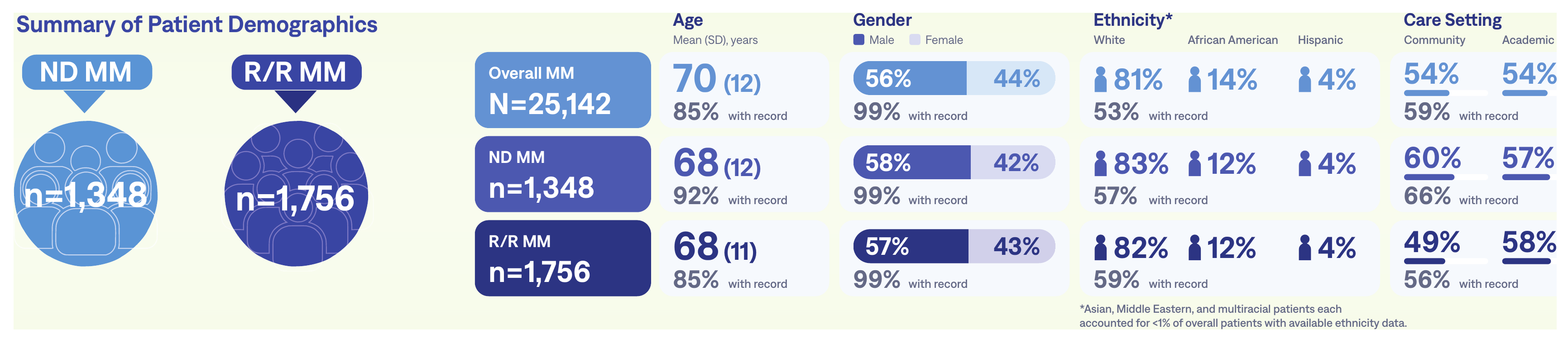
  • AnswerY identified 25,142 patients with MM diagnosed between 2021 and 2025.
  • Of these, sufficient information was available to further refine the cohort and categorize disease status in 1,348 patients with ND MM and 1,756 patients with R/R MM. Other demographics are below.


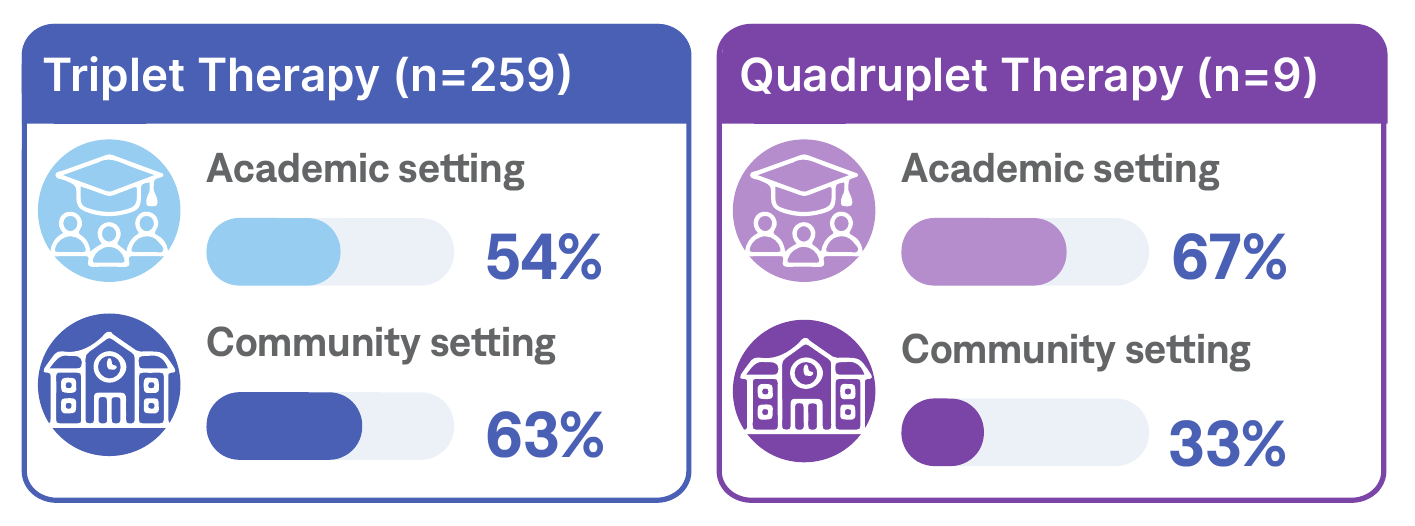
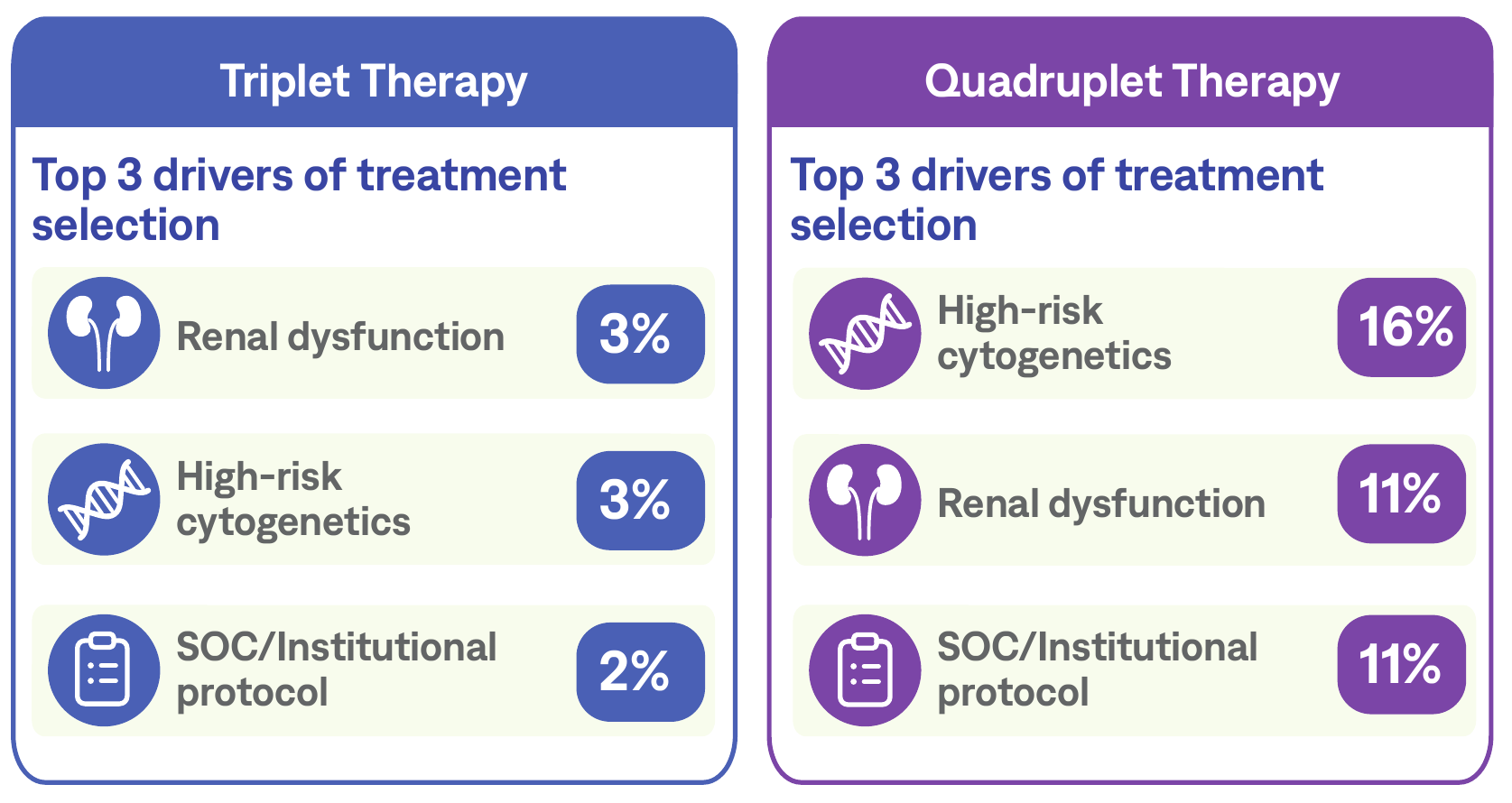
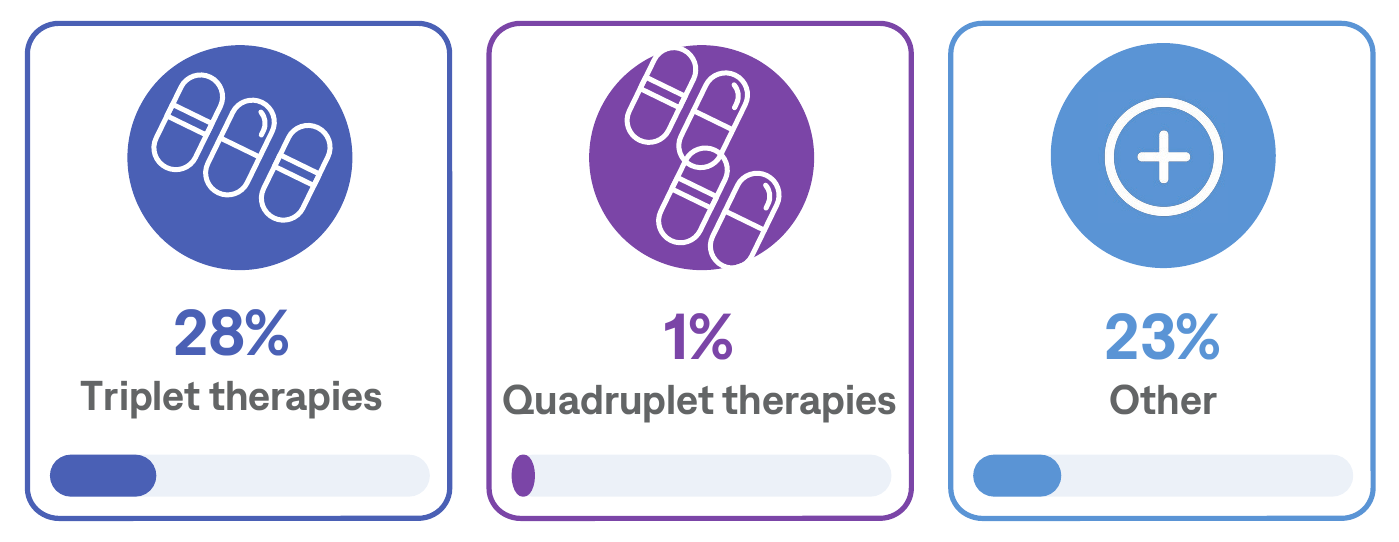
  • Among patients with newly diagnosed MM, triplet therapy was the predominant documented frontline treatment approach, whereas quadruplet therapy was used infrequently and primarily among patients with higher-risk disease features.


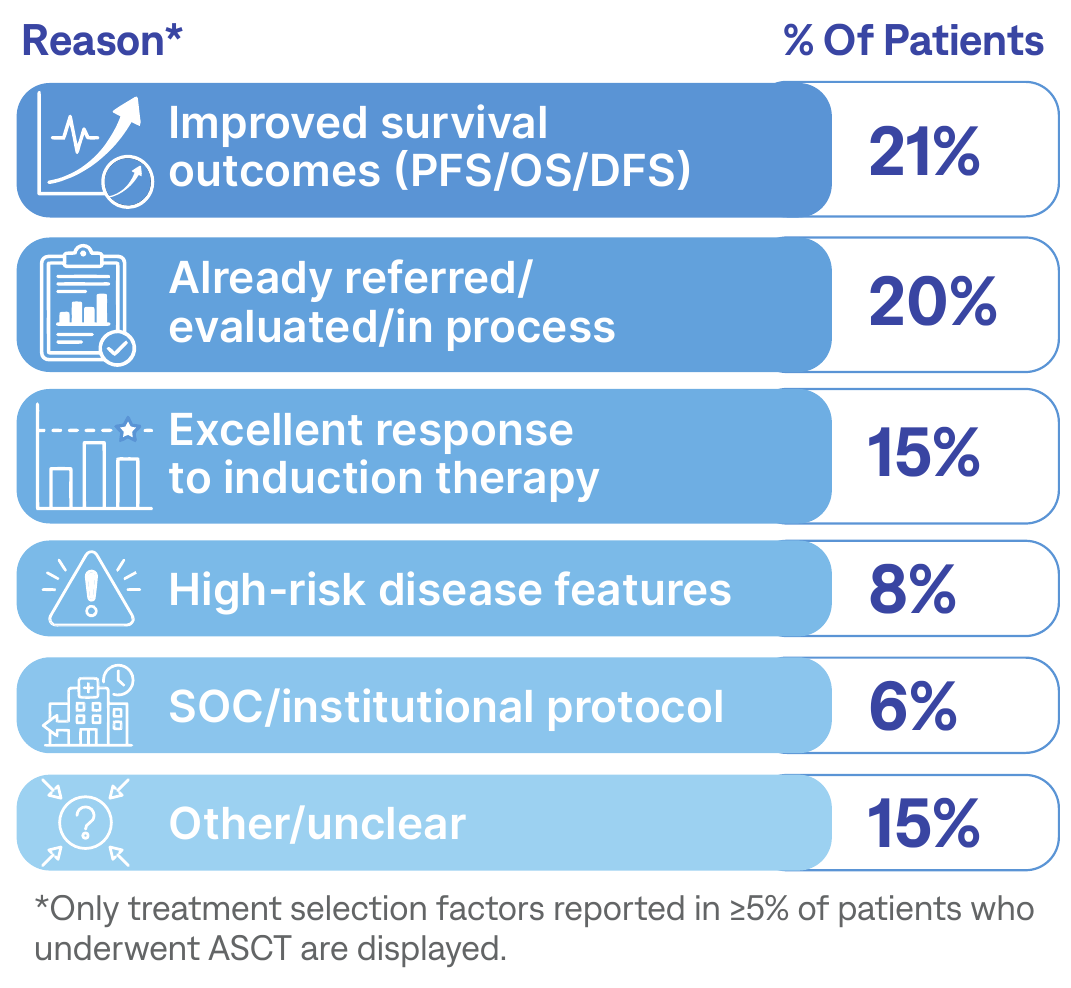
  • Among patients with ND MM, 18% were documented to have initiated or planned for ASCT.
  • Documented reasons for ASCT initiation and patient characteristics are summarized below.


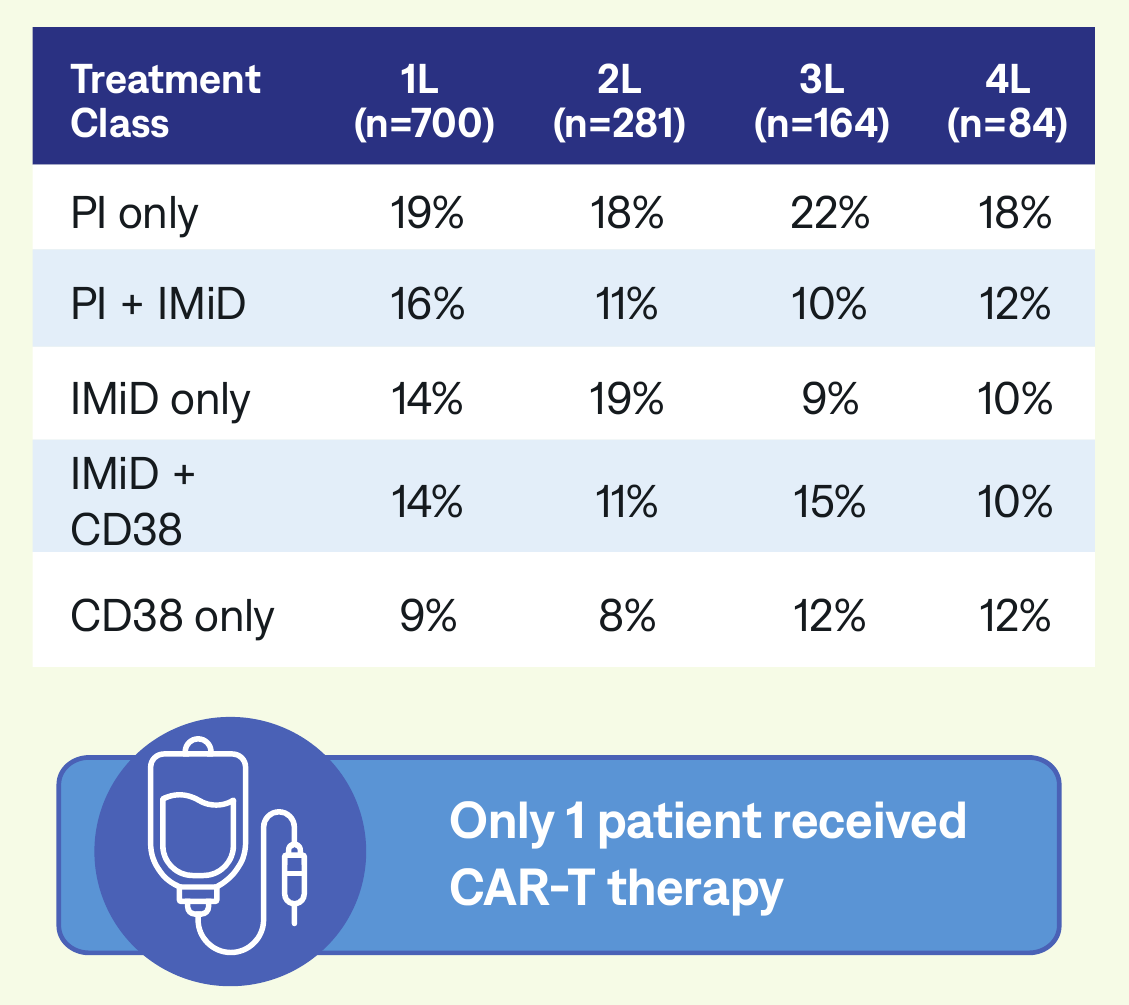
  • Treatment utilization and sequencing patterns in R/R MM were heterogeneous across lines of therapy, with limited use of CAR-T therapy observed in the study cohort. The below summarizes treatment class utilization across lines of therapy and the most frequently observed 1L→2L treatment pathways in R/R MM.


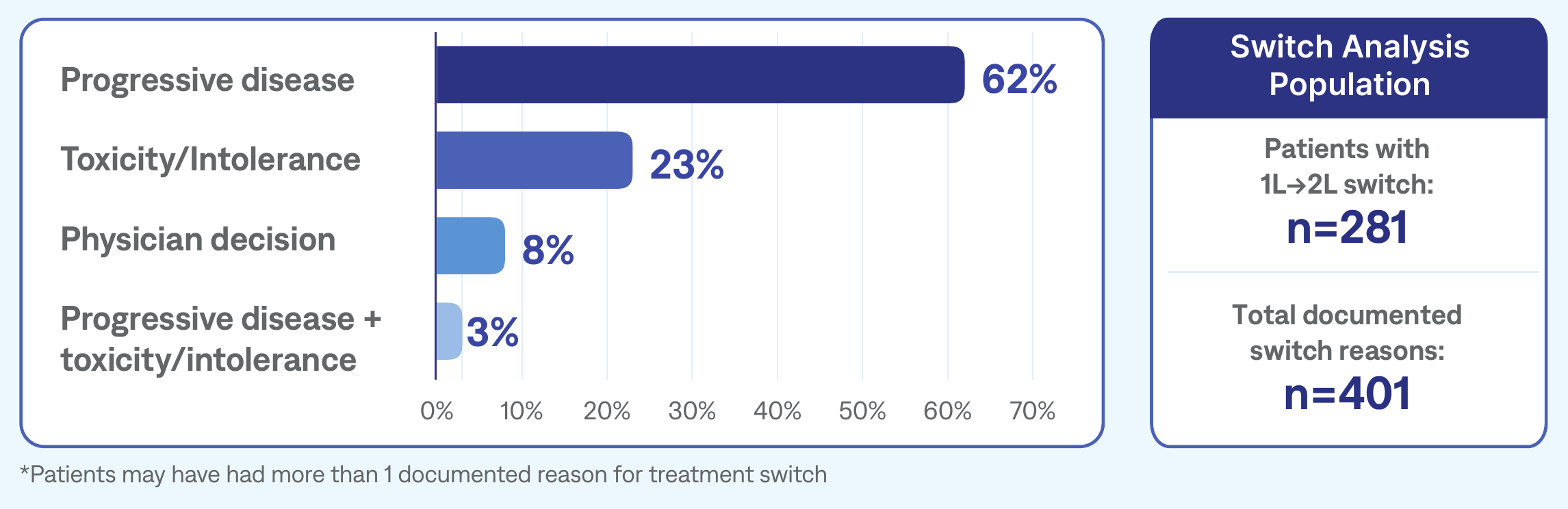
  • Among patients switching from 1L to 2L therapy, the most frequently documented reasons were progressive disease (62%), toxicity/intolerance (23%), and physician decision (8%).


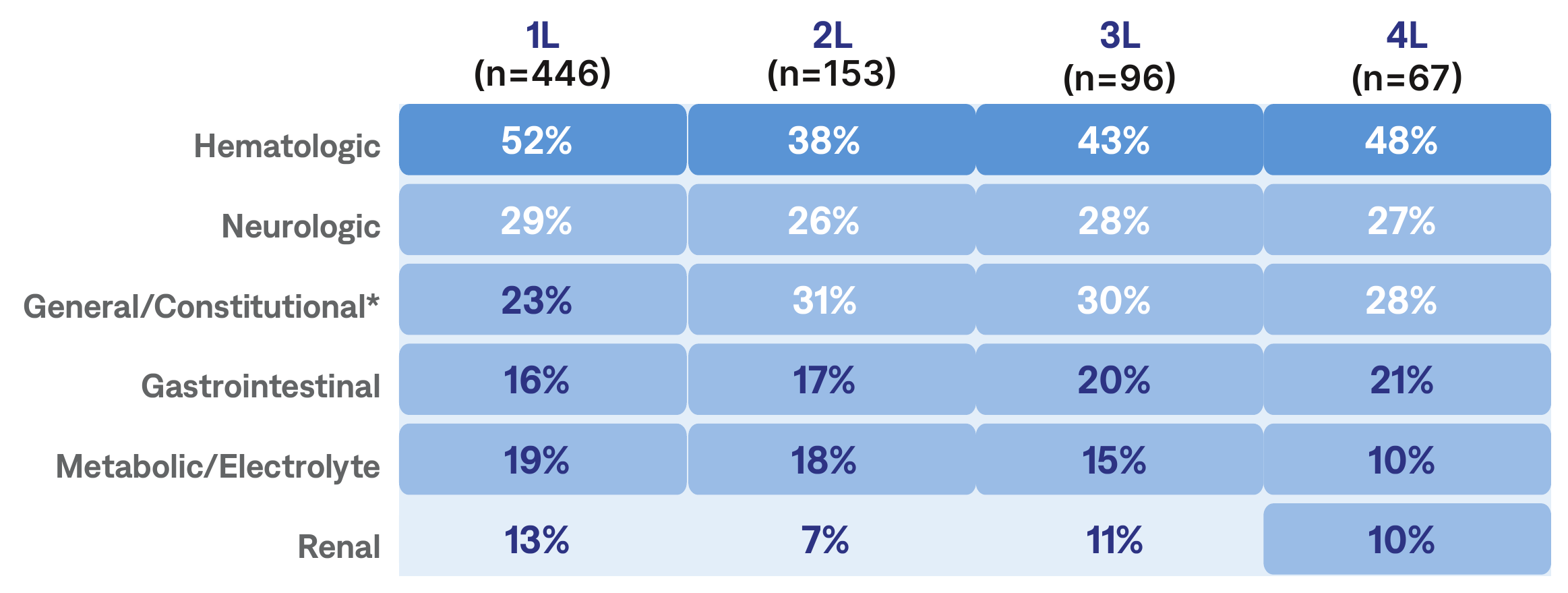
  • Hematologic AEs were the most frequently documented AE category across all lines of therapy, occurring in 38%-52% of patients, followed by neurologic (26%-29%) and general/constitutional AEs (23%-31%).


Conclusions

  • Real-world treatment patterns in MM remain heterogeneous, reflecting the influence of disease characteristics, treatment response, tolerability, and anticipated clinical benefit on therapeutic decision-making.
  • Triplet therapy remained the predominantly documented frontline approach in ND MM relative to quadruplet therapy.
  • ASCT was incorporated into frontline management, primarily among younger patients with favorable treatment response and anticipated clinical benefit.
  • Treatment utilization and sequencing patterns in R/R MM were heterogeneous, with multiple treatment classes represented throughout the treatment journey, and limited documented use of CAR-T therapy.
  • Hematologic AEs were the most frequently documented AE category across treatment lines, and disease progression was the leading documented reason for switching from 1L to 2L therapy.
  • The increasing number of therapeutic options in MM has transformed care into a highly individualized decision-making process, highlighting the importance of understanding how treatment selection, sequencing, and transplantation decisions are made in routine clinical practice.


DOWNLOAD POSTER


AnswerY helps explain prescriber rationale. See other oncology research.



PUBLISHED

•

October 26, 2026
Read Next
June 16, 2026
Press Release
Read Articlearrow
May 20, 2026
October 27, 2025