

How Severity Drives Resource Burden In OI

How Severity Drives Resource Burden In OI

Real-world research on how severity drives resource burden in OI.

Real-World Healthcare Resource Utilization & Associated Drivers Among Patients With Osteogenesis Imperfecta


This poster was originally presented at ISPOR on May 20, 2026, in Philadelphia, PA.


Authors: Dave Iwanyckyj, Rohan Vashi, Esteban Masuelli, Melanie Jardim


Affiliations: Amplity Inc, Langhorne, PA, USA


Introduction

This study aims to characterize healthcare resource utilization (HCRU) patterns and the potential reasons that may drive these patterns in patients with osteogenesis imperfecta (OI), a rare genetic disorder of connective tissues caused by an abnormality in the synthesis or processing of type 1 collagen, leading to skeletal fragility and increased fracture risk.
 

Methods

  • This retrospective observational study utilized Amplity AnswerY™, our proprietary real-world database and platform built from HIPAA-compliant transcriptions of US prescriber–patient visits.
    • Using AI and NLP, it extracts, visualizes, and summarizes treatment discussions and clinical decisions and covers inpatient and outpatient care across more than 70 specialties since 2017.
  • NLP was used to search and analyze the AnswerY database and platform from 1732 providers for mentioned diagnosis of OI from January 1, 2017, to July 1, 2025.
  • HCRU was defined as mentions of or related to ED use, hospitalizations, and outpatient visits, and was quantified descriptively.
  • Drivers behind HCRU in patients with OI were reported qualitatively.
  • Based on HCRU, 2 subgroups clinically different in severity became apparent. Thus, treatment pattern analyses and drivers of HCRU were also analyzed among the 2 subgroups.


Results


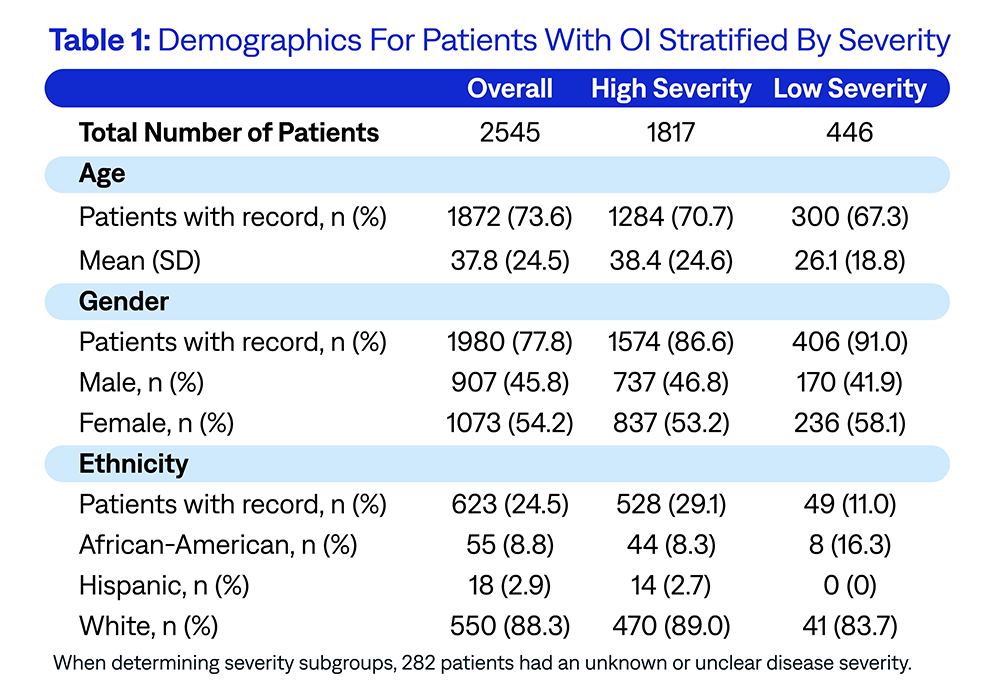
  • AnswerY identified 2545 patients with OI from 1732 providers from 2017 to 2025 (see Table 1).

Demographics For Patients With OI Stratified By Severity

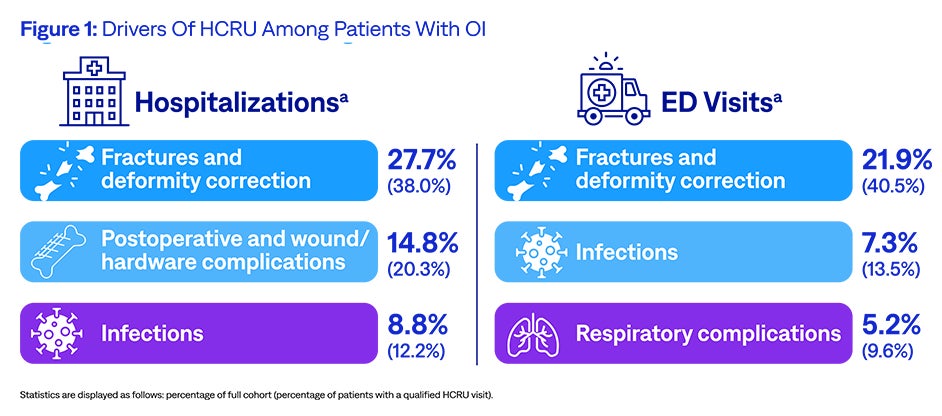
  • Patients with OI primarily seek medical care due to fractures, deformity correction, and infections. Figure 1 shows the drivers of hospitalizations and ED visits among all patients with OI.


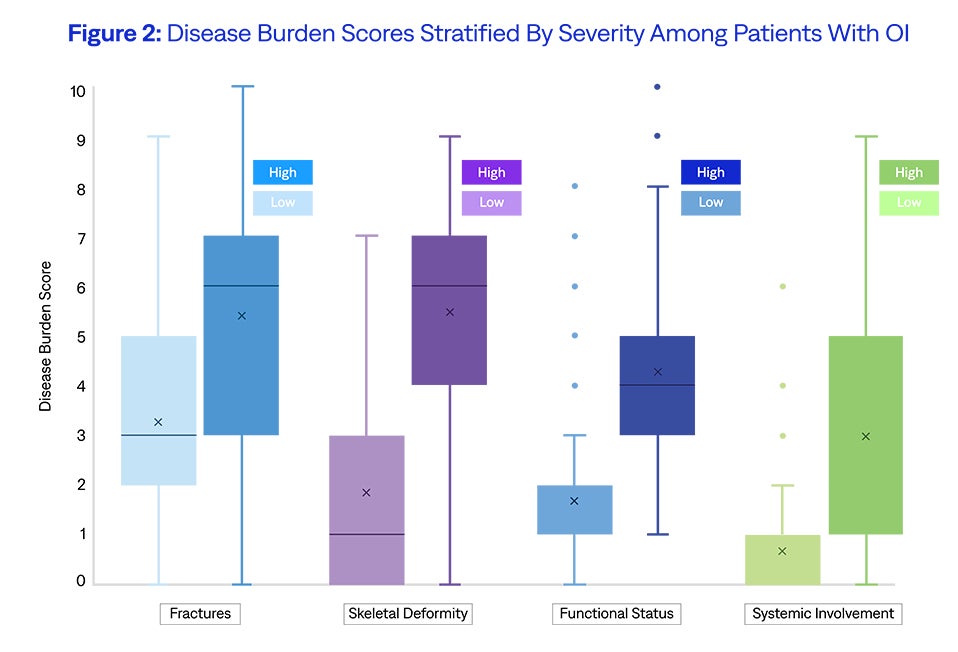
  • Based on disease burden scores, 2 distinct disease severity subgroups became apparent. Figure 2 shows these scores stratified by disease severity.
    • Among patients who were quantifiable, patients with lower severity OI had a lower number of fractures compared with those with higher severity (lower severity vs higher severity; mean number of fractures: 2.23 vs 5.73).
    • Among patients with OI, patients with lower severity disease also showed lower disease burden score overall in every category.


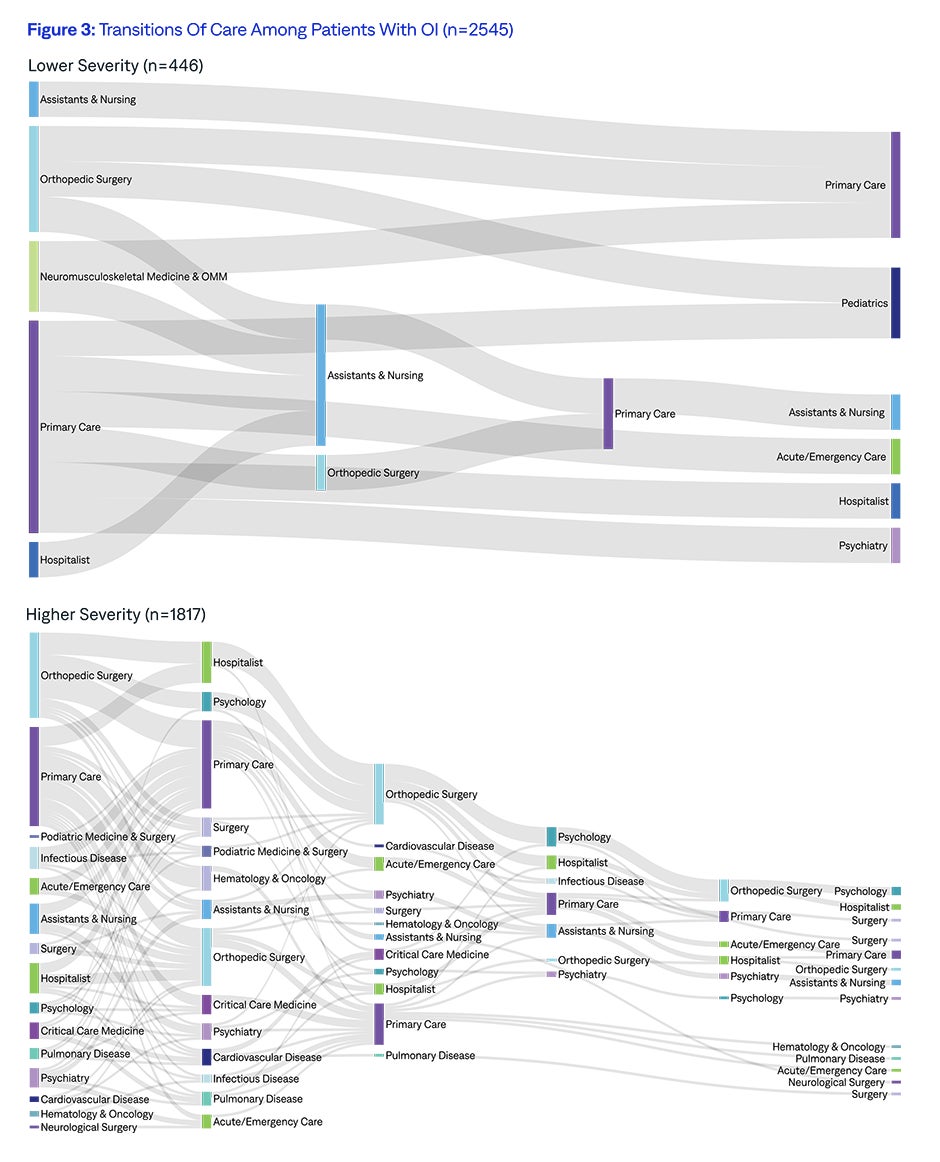
  • The analysis identified 2 subgroups based on HCRU. Figure 3 shows the transitions of care pathways among patients with OI stratified by severity.
    • A lower severity subgroup (n=446) experienced lower HCRU with periodic specialist visits, whereas a higher severity subgroup (n=1817) experienced high rates of recurrent fractures, multiple surgeries, and multidisciplinary outpatient/post-acute care.
    • Compared with the lower severity subgroup, the higher severity subgroup had more patients with ≥1 documented OI-associated ED visits (33.4% vs 11.9%) and hospitalizations (51.6% vs 6.1%).


Conclusions

  • Research based on transcription notes in AnswerY found all patients with OI have a high HCRU burden driven directly by the disease and indirectly through complications.
  • Two distinct subgroups based on HCRU were identified in this study, with a majority of patients falling into the higher severity subgroup.
  • High disease burden scores and early maximization of certain treatment-related benefits highlight the lifelong, pervasive impact of OI on patients, while the multidisciplinary care approach outlined in treatment pathways similarly emphasizes the significant strain on healthcare providers and systems
  • Findings highlight the heterogeneity of disease within patients with OI and support a multidisciplinary and tailored approach toward treatment, particularly among high-burden subgroup.
  • There may be a benefit to mirroring the tailored approach to treatment with a similar effort toward designing care pathways, payer policies, and reimbursement frameworks.


DOWNLOAD POSTER


AnswerY helps explain prescriber rationale. See other musculoskeletal-related research.

 

PUBLISHED

May 20, 2026
Two people reviewing documents in a modern office.

Subscribe To Our Newsletter

Unlock smarter strategies with Intel Insider—your monthly dose of AI, data, and tech innovations for medical, sales, marketing, and real-world data success.

Read Next
Press Release
Read Articlearrow
May 20, 2026
May 19, 2026
Research
August 24, 2023
Article