

Healthcare professionals (HCPs) have become jaded with endless banner ads, visual aids, and emails from pharma marketers that just don’t connect with them. In this “sea of sameness,” uninformed messaging strategies are failing to cut through and inspire action.
However, the use of richer, AI-powered insights is giving marketers the edge they need to build effective pharma messaging strategies. In this article, you’ll explore why traditional approaches to messaging are falling behind, what separates powerful messaging from noise, and how AI is transforming the game.
The complexity of pharma brand messaging begins with the intel or data it’s based on. As marketers, we sometimes get a slew of information thrown at us, and it’s easy to get lost in countless themes and data points. The challenge is to distill all of that into something simple, resonant, and impactful.
The reality is that marketers rely on primary market research to help shape their strategies, but traditional methods often fall short due to their vagueness and tendency to produce overly broad insights. This can lead to inaccurate segment identification and generic messaging strategies. Consequently, pharma marketers have been stuck playing an expensive guessing game, where effort doesn’t translate into results.
“When you’re sitting behind that glass window or when you’re getting these large quantitative samples, you don’t know who’s actually filling out this information,” says Fleur Lee, Senior Director, Dayvigo, US Brand Lead at Eisai Inc.
When you can’t meaningfully capture HCP motivations to inform effective pharma messaging, you’ll start to see some familiar setbacks:
So, let’s back up. As the foundation for most pharma marketing strategies, traditional primary market research has its drawbacks. In a recent webinar hosted by MM+M, the audience called out 2 common pain points:
Sources like claims data, prescription tracking, and patient records tell you what treatment was prescribed, and by whom. But nuance and clinical complexity are left out. To truly understand HCP motivations, it’s important to know why a particular treatment was prescribed.
The disadvantages of primary market research are compounded by the fact that it can be slow and often limited by small sample sizes that may not adequately reflect the diversity of healthcare professionals’ practice experiences. As Lee notes, “Sometimes, you’ll feel the study will take about 2 months before you actually get your final report.”
By the time marketing teams are ready to act, the conversation could already be changing. These drawbacks have marketers playing catch-up for messaging angles that might not even translate into reliable ROI. However, with the advancements in AI, pharma marketers now have the technology to create up-to-date and effective messaging strategies, without months of research and overblown budgets, and accelerate the treatment adoption process.
With AI-powered insights on the scene, pharma marketers can pair actionable intelligence with 3 principles for creating memorable pharma messaging strategies, as explored in the webinar: resonance, simplicity, and consistency.
“You want to keep these messages simple and digestible. You want to make sure they have heart and impact. And then, you want to repeat, repeat, and repeat,” Lee states.
Results-oriented pharma messaging strikes a balance between informing your audience, building brand trust, and being a credible voice in the market. HCPs won’t simply adopt a new therapy because you want them to. They have to genuinely realize how your product fits their problem. And a great pharma messaging strategy does just that.
Imagine walking into your office one morning to have your CMO ask you for a pharma messaging strategy to launch a new Alzheimer’s disease treatment program. Based on your experience, you know traditional market research would take several long, painful months. And that doesn’t even include vetting the vendors or determining the budget.
But what if you were equipped with AI technology that searches through millions of data points for HCPs likely interested in your product, pinpoints where they are on the adoption curve, and crafts messaging that resonates with them?
Introducing AnswerY™, our AI-driven and LLM-powered pharma insights platform that draws from over 82 million HIPAA-compliant, patient–doctor conversations that contain context-rich, granular information that yields actionable insights. Access to this intel is more powerful than surveys or focus groups because it preserves the nuances and “whys” of HCP decisions, captures clinical complexity, and analyzes the lived experience of doctors and patients.
“You have to know what’s meaningful to physicians and the language that they’re using. We need to know where they are on the journey of therapeutic adoption,” says Susan Duffy, President of Comms at Amplity. “A tool like AnswerY can really help us better understand what real-time behavior is going on and the insights we need to create more resonant messages.”
Steve Ennen, Director of Client Partnership Strategy at Amplity adds, “This approach differs from using EMR and EHR sources. AnswerY is really the stream of consciousness of the HCP as it goes in. It’s a huge body of unstructured data. One can imagine the tens of thousands of insights in any set of records.”
AnswerY isn’t a stagnant, one-and-done solution. It’s refreshed every 30 days, with 1 million new patient records added monthly across 155,000+ individual and multispecialty healthcare providers, in every known therapeutic area.
AI-savvy pharma marketers can use this game-changing tool to discover new segments, refine messaging, and drive results. In minutes, not months.
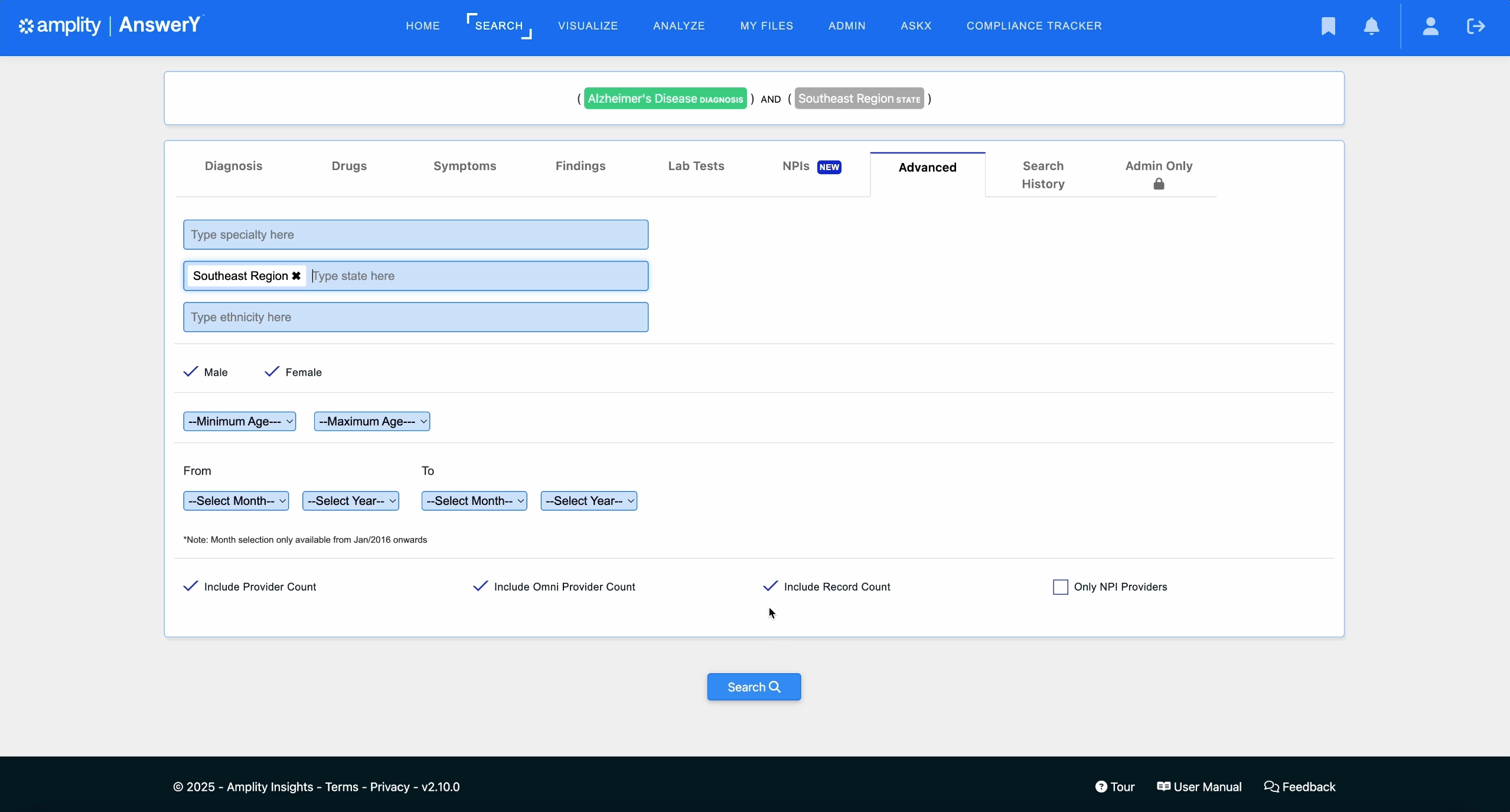
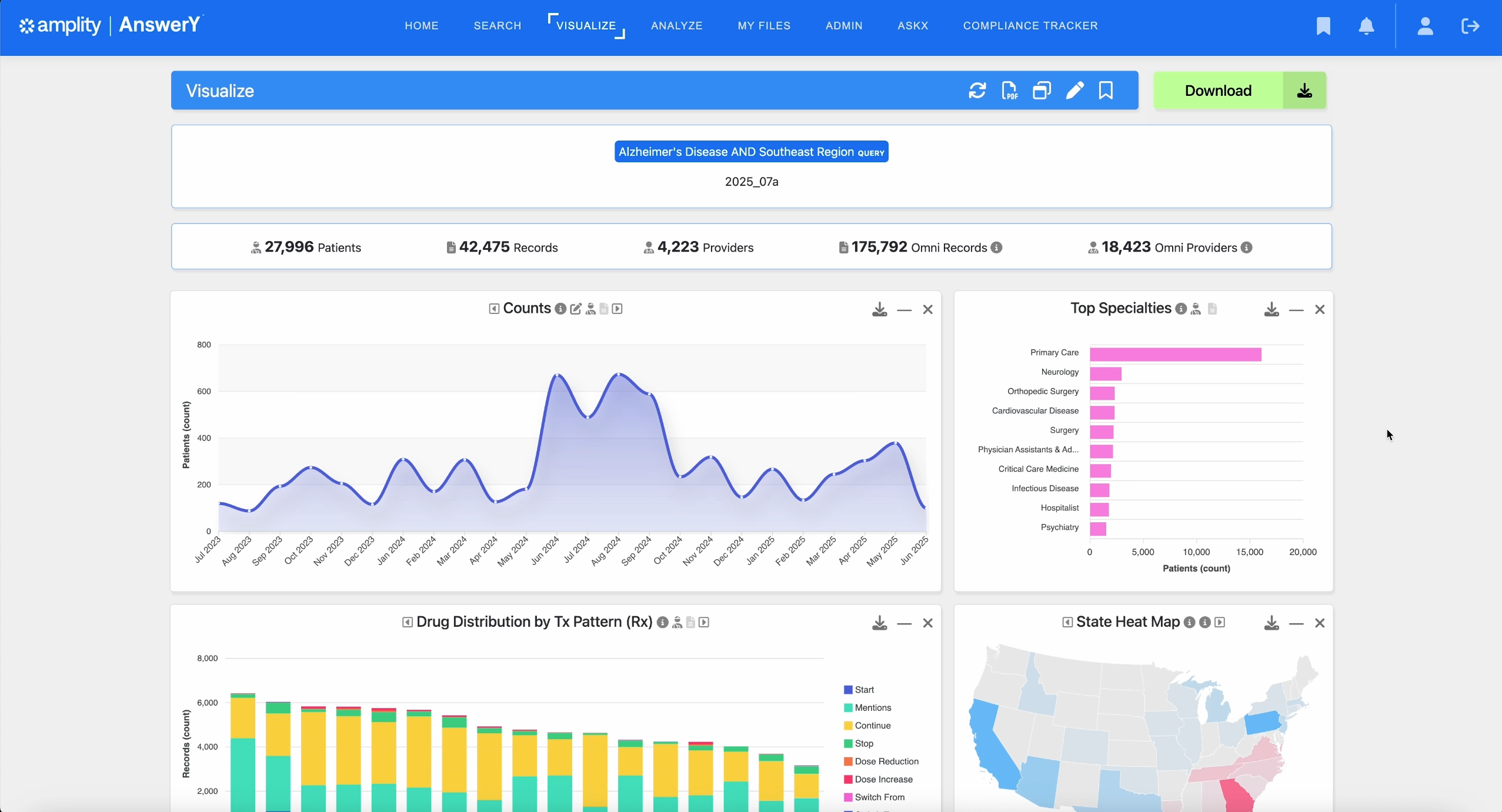
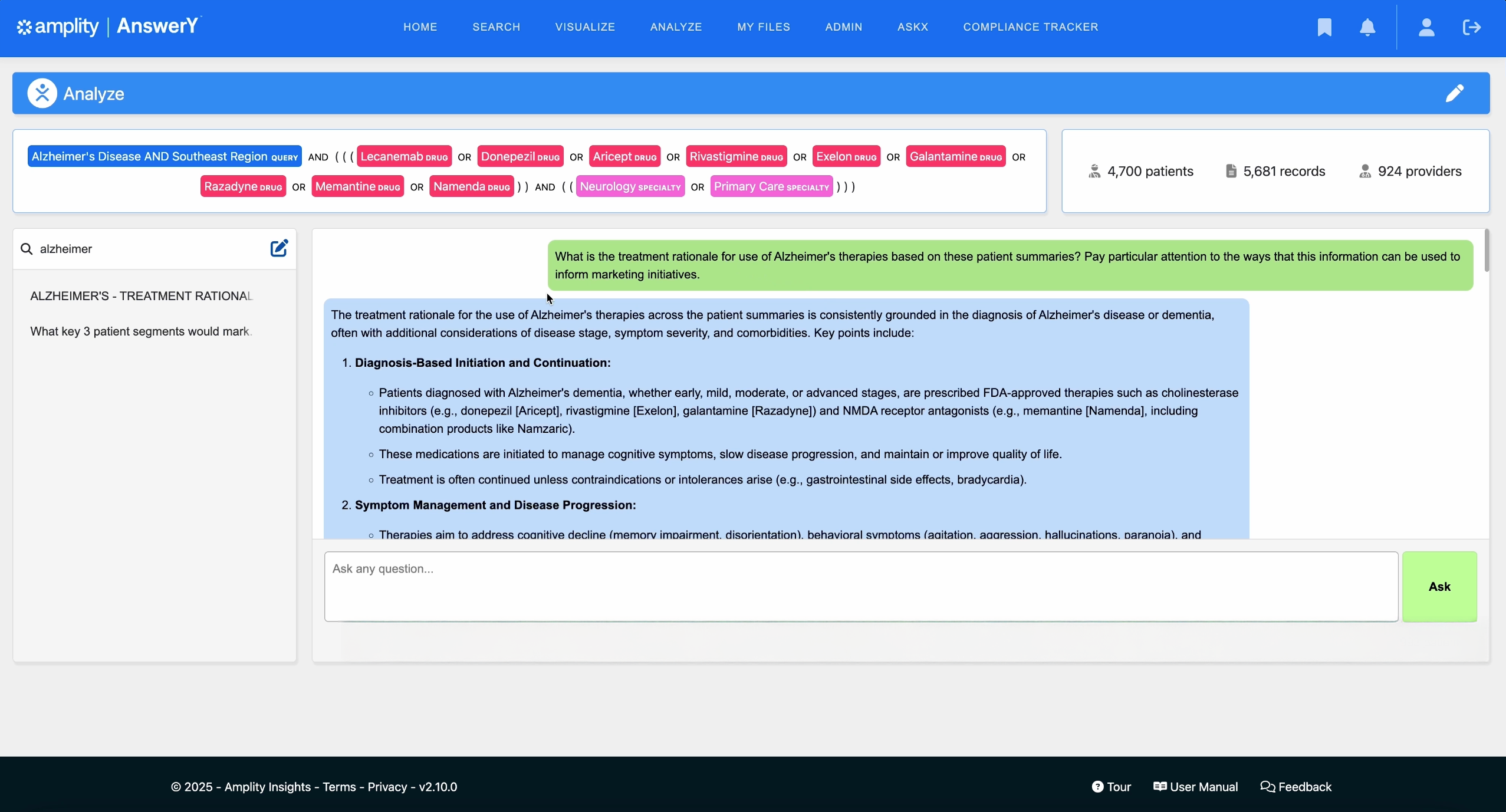
Let’s return to that new Alzheimer’s treatment messaging strategy plan you were working on. Understanding how patients and providers discuss Alzheimer’s across regions can feel overwhelming. That’s where AnswerY simplifies the process, turning real conversations into actionable insights in 3 steps.
1. Search: This is when you build your cohort and AnswerY explores millions of patient–provider interactions, applying filters to uncover barriers, side effects, and treatment perceptions. Here we focused on the Southeastern US to refine how different regions discuss Alzheimer’s and the unique concerns or patterns in treatment discussions. So, the platform starts broad but allows you to refine and focus on the audience you want to reach.
2. Visualize: Once you’ve isolated your cohort, you can use over 20 predefined charts and graphs to organize data to identify what sets this specific Alzheimer’s cohort apart—from prescriber rationale and patient concerns to treatment pathways and adherence rates. AnswerY’s pharma data visualization capabilities make it easier to spot trends, pressure points, and outliers.
3. Analyze: Now, you can type your business question into the AI-powered search tool to explore treatment rationale behind decisions and build patient and HCP profiles derived from direct quotes from the providers treating the patients. In this case, we asked, “What is the treatment rationale for use of Alzheimer’s therapies based on these patient summaries?” And we specifically requested the AI tool to inform marketing initiatives. As shown below, within minutes you get intel from 4,700 patients, across 5,681 records, and almost 1,000 providers. These sample sizes far exceed traditional market research, giving you deeper data points to work with, and much faster and cost effectively.
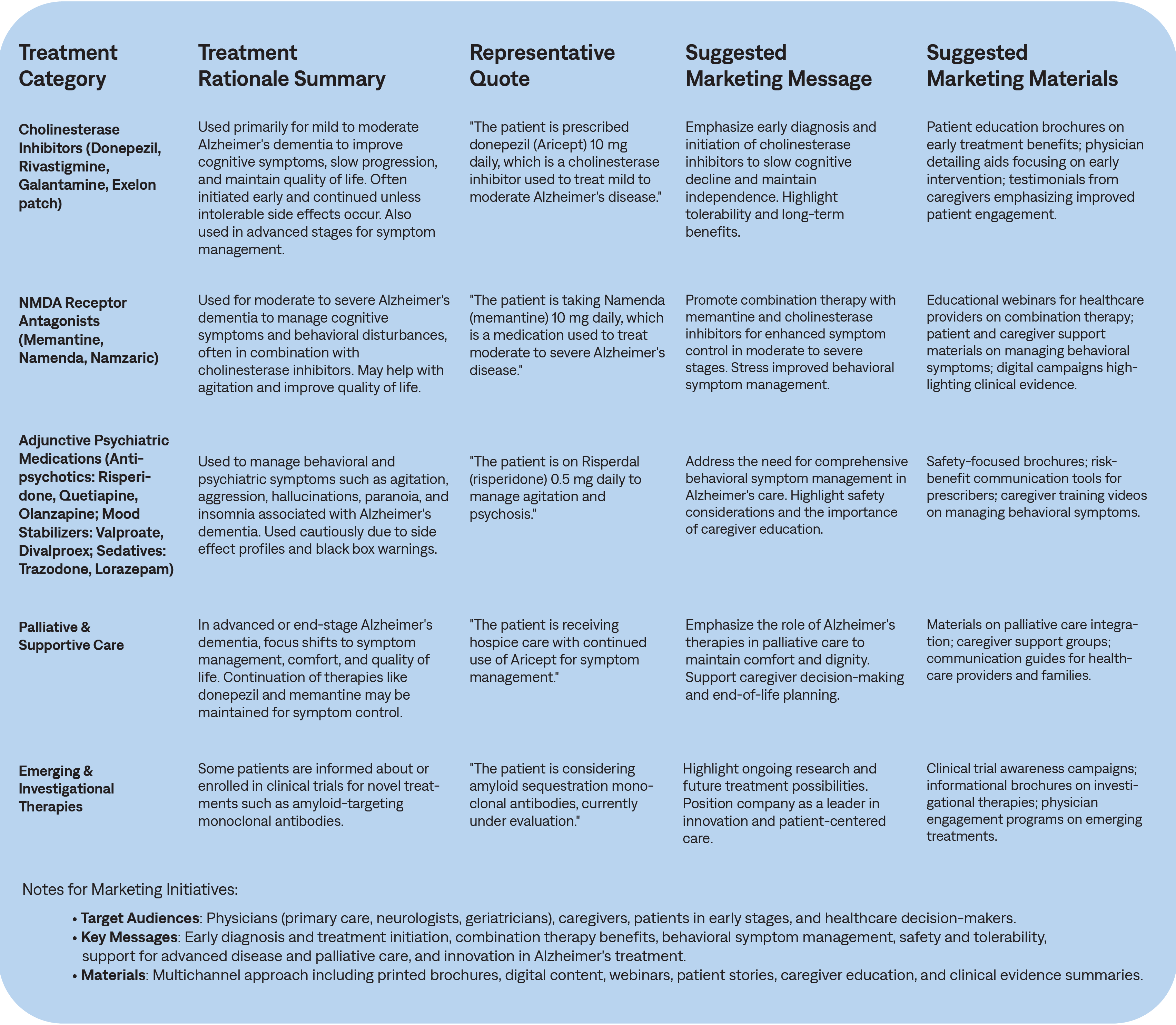
From there, you and your team can strategize. As shown below, AnswerY will guide you in terms of suggested audiences (physicians, caregivers, patients, etc), key marketing messages (early diagnosis & treatment initiation, behavioral symptom management, innovation in treatment, etc), and marketing materials (targeted email sequences, customized patient education brochures, or content for educational webinars), forming a blueprint for your messaging strategy.
For example: If you’re interested in HCPs who currently use standard therapies, you can opt for cholinesterase inhibitors as a treatment category. From there, AnswerY suggests a marketing message that emphasizes early diagnosis and the slowing of cognitive decline based on the HCPs’ own language.
With AI, these powerful capabilities are applicable across every cohort, at every stage of the adoption curve, in any therapeutic area. Using Alzheimer’s disease as an example, marketers could explore 5 different treatment categories, including palliative & supportive care and emerging & investigational therapies. Each treatment category provides insights that can inform respective messaging strategies, in granular detail. No spray and pray, or “hope” you’re hitting the right audience with the right message. It’s all there, to guide you to deeper HCP engagement and improved product adoption.
Costly guesswork is becoming a thing of the past. Pharma marketers can now move past the constraints of traditional methods and build pharma messaging strategies that deliver stronger results. With AI, previously untapped patient–provider conversations are now accessible, giving marketers the insights and agility they need to develop impactful messaging, and fast.
Make your messaging memorable with AnswerY, so you can quickly (and cost-effectively) draw on more than 82 million records to rapidly surface richer, precise insights to accelerate HCP engagement and drive sales.
Want to see it in action? Schedule a demo with us today.